
Speech therapy for kids: How it helps children communicate with confidence
When a child has trouble speaking or being understood, it can affect more than just their words — it can also impact their confidence and social connections.
Speech therapy for kids helps bridge that gap by teaching communication skills in an engaging and supportive way. Through engaging, play-based speech and language therapy, children learn to express themselves more clearly, build confidence, and enjoy communicating with others.
Whether your child faces speech delays, pronunciation challenges, or difficulty forming sentences, early guidance can help them speak, connect, and thrive with joy.
What is speech therapy for kids?
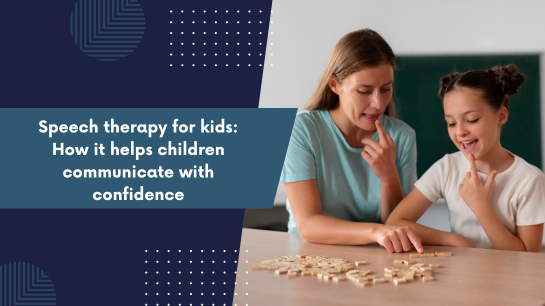
Speech therapy for kids is a specialised program designed to help children improve their ability to speak, understand, and communicate effectively. It focuses on developing both verbal and non-verbal communication skills through fun, engaging, and age-appropriate activities.
It is led by a certified speech and language therapist and addresses challenges such as unclear speech, difficulty pronouncing words, stuttering, or delays in language development.
Using techniques like play-based learning, repetition, and interactive exercises, speech and language therapy helps children express themselves clearly, understand others better, and build confidence in everyday communication.
Which conditions are treated with speech therapy?
Speech therapy supports children with a wide range of communication and language challenges. Some common conditions and concerns include:
- Speech delays
- Language delays
- Stuttering
- Voice disorders
- Articulation disorders
- Apraxia of speech
- Oral motor difficulties
- Autism spectrum disorder (ASD)
- Developmental delays
- Hearing impairment-related speech issues
What are the signs your child may need speech therapy?
Every child develops speech and language skills at their own pace, but some may need a little extra help to reach certain milestones. Recognising the early signs can make a big difference, especially since early speech therapy for toddlers often leads to faster and more lasting progress.
You may want to consider speech and language therapy if your child:
- Doesn’t babble, coo, or make sounds by 12 months
- Says very few words or struggles to form short sentences by age 2–3
- Has trouble pronouncing sounds (for example, saying “wabbit” instead of “rabbit”)
- Stutters or repeats words frequently
- Has difficulty understanding instructions or following simple directions
- Seems frustrated when trying to express themselves
- Avoids talking or engaging in conversation with others
- Has a noticeably different speaking ability compared to children of the same age
How does speech and language therapy work?
Speech and language therapy helps children develop clear, confident communication through structured, play-based sessions. Here’s how it works:
- Initial assessment: A certified Speech Pathologist or Speech and Language Therapist evaluates your child’s speech, language, and communication skills.
- Personalised plan: A tailored therapy program is created to target your child’s specific needs — from pronunciation and fluency to language understanding.
- Play-based techniques: Sessions use games, songs, storytelling, and interactive activities to make learning fun and effective.
- Parental involvement: Parents receive guidance on simple home exercises to reinforce progress between sessions.
- Ongoing progress: Regular therapy builds clarity, confidence, and social communication skills over time.
Through this supportive, child-friendly approach, speech therapy for kids helps young learners find their voice and communicate with ease.
What are the benefits of speech therapy for kids?
- Improved speech clarity: Enables children to pronounce words correctly and speak more clearly.
- Enhanced language development: Builds vocabulary, sentence structure, and comprehension skills.
- Better communication skills: Helps children express thoughts, needs, and emotions effectively.
- Increased confidence: Reduces frustration and boosts self-esteem in social and academic settings.
- Stronger academic performance: Improves listening, understanding, and classroom participation.
- Social and emotional growth: Encourages positive interaction with family, teachers, and peers.
- Personalised progress: Therapy is tailored to each child’s unique goals and pace.
Through consistent speech and language therapy, children learn to communicate with clarity, confidence, and joy, setting the foundation for lifelong success.
Why early speech and language therapy matters?
Early speech and language therapy can make a lasting difference in a child’s ability to communicate and learn.
When therapy begins at a young age, children are more responsive because their brains are still developing and adaptable to new sounds, words, and communication patterns.
Early speech therapy for kids also helps prevent frustration and boosts confidence by giving children the tools to express themselves clearly.
By supporting speech and language skills early, parents can help their child build stronger social connections, perform better academically, and develop lifelong communication confidence.
Dr Arif Khan: Helping kids speak with confidence
Under the expert guidance of Dr Arif Khan, children receive compassionate and evidence-based care that nurtures their communication skills and confidence.
With a strong focus on early intervention and individualised therapy, his approach to speech and language therapy helps each child find their voice in a supportive, encouraging environment.
Whether it’s improving speech clarity, language comprehension, or social communication, Dr Arif Khan’s goal is to empower every child to express themselves freely and confidently — building the foundation for lifelong learning, connection, and self-assurance.
FAQs
What does speech and language therapy include?
It focuses on improving pronunciation, vocabulary, sentence formation, and understanding language, helping kids communicate more clearly and confidently.
When should my child start speech therapy?
If your child struggles to pronounce words, express thoughts, or understand instructions, it’s best to start speech therapy for kids early.
How long does speech therapy take?
Every child is different. Some may see improvement in a few months, while others, depending on their goals and progress, may need longer therapy.
What is the difference between speech and language therapy?
Speech therapy focuses on pronunciation and clarity, while language therapy helps children effectively understand and use words, sentences, and conversation.
How does speech pathology help children?
Speech pathology helps children develop essential communication skills, overcome speech or language difficulties, and improve confidence in school and daily life.